Source E1 Commercial Plywood for Construction, Furniture, and Packaging
Find 30 E1 Commercial Plywood for Construction options with varying grades, sizes, and bonding strengths. Compare specifications from multiple Chinese manufacturers to select the right material for your project needs.
Key considerations
Products List


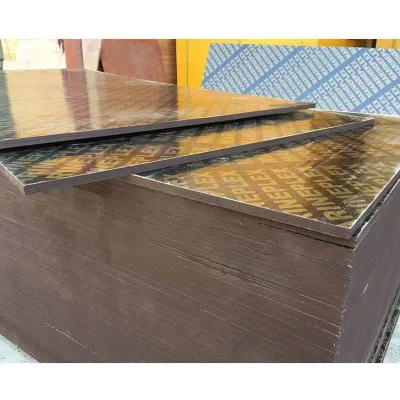

Construction Material Film Faced Plywood of E1 Construction Plywood Timber
$2.00 - $10.00
MOQ: 1 container


Furniture Grade Melamine Faced Ecological Commercial Plywood
$3.50 - $4.65
MOQ: 21 Cubic Meter/Cubic Meters

12/15/18mm White Color Melamine Laminated Commercial Plywood
$3.50 - $4.65
MOQ: 21 Cubic Meter/Cubic Meters


Comprehensive Sourcing Guide
Strategic Sourcing Guide for E1 Commercial Plywood in Construction
Understanding the Technical Profile of Commercial Plywood
When sourcing E1 Commercial Plywood for Construction projects, buyers must first establish a clear understanding of the material's technical architecture. The product is fundamentally defined by its layered composition, typically utilizing veneers such as Poplar, Bintangor, Okoume, or Sapele, which are bonded together to achieve structural integrity. The grain structure is a critical observation point; while some listings specify a "Straight Grain" orientation for consistency, others may offer Combi or Eucalyptus face and back options depending on the specific grade required. The density of the material generally falls within the 500-580 kgs/Cbm range, a metric that directly influences the weight-to-strength ratio essential for load-bearing applications in building frameworks.
The bonding strength is another paramount technical specification that dictates the plywood's suitability for different environmental conditions. In the commercial sector, bonding classes vary, with observations noting classifications such as I(NQF), Ⅱ(Ns), and Ⅲ(Nc). These classifications indicate the adhesive's resistance to moisture and heat, with higher classes generally required for exterior or high-humidity applications. The glue types employed are typically Melamine WBP (Water Boil Proof) or Phenolic WBP, ensuring that the layers remain intact under stress and exposure to elements. Furthermore, the moisture content is strictly regulated, with observed standards requiring levels below 12% to prevent warping, swelling, or fungal growth once installed.
Dimensions and thickness are equally vital for procurement planning. The standard sheet size frequently cited is 1220mm x 2440mm, though variations such as 1250mm x 2500mm or custom cuts are available to suit specific project needs. Thickness specifications often center around 18mm, a common standard for structural sheathing and formwork, but the product may also be described as 13-ply, indicating the number of veneer layers used to achieve that thickness. The Modulus of Elasticity (MOE) is a key performance indicator for stiffness, with observed values exceeding 6000MPa, ensuring the material can withstand bending forces without permanent deformation. Buyers should verify these specific numerical ranges against their engineering requirements, as the "E1" designation primarily refers to formaldehyde emissions but does not automatically guarantee a specific MOE or thickness without explicit confirmation.
Compliance and Certification Verification Protocols
In the global construction market, regulatory compliance is non-negotiable. The "E1" designation specifically refers to the Formaldehyde Emission Standards, a critical health and safety metric. While some product listings mention "EGrain" or "Grade One" classifications, the E1 standard itself represents a specific threshold for formaldehyde release that is widely accepted in international trade. Buyers must ensure that the supplier provides valid test reports confirming compliance with E1 limits, as this is often a prerequisite for building permits in many jurisdictions. Beyond formaldehyde, the product often carries a suite of certifications that validate its quality and origin. Observed certifications include ISO, CE, CARB (California Air Resources Board), and SGS.
The presence of these certifications should be treated as evidence of a supplier's adherence to international quality management systems and environmental regulations. For instance, CARB compliance is particularly relevant for projects targeting green building standards or those located in North America. The CE mark indicates conformity with health, safety, and environmental protection standards for products sold within the European Economic Area. However, the mere presence of a certification logo on a product listing does not guarantee current validity. Procurement teams must request up-to-date certificates and verify the issuing body's accreditation. It is also essential to distinguish between the product's origin and the certification body's location. Products originating from regions like Shouguang, Weifang, Shandong, or Guigang, Guangxi, China, must still meet the stringent requirements of the destination market's regulatory framework.
Buyers should also be aware of the distinction between "Excellent Grade" and other commercial grades. While "Excellent Grade" suggests superior surface finish and minimal defects, it does not automatically imply higher structural performance than a "Grade One" or "BB/CC" classification, which may refer to the quality of the face and back veneers. The "BB/CC" classification typically denotes a specific grade of veneer quality where "B" and "C" refer to the appearance and defect tolerance of the face and core layers, respectively. Understanding these nuances is crucial when selecting plywood for visible applications versus hidden structural uses.
Cost Drivers and Pricing Dynamics
The pricing of commercial plywood is influenced by a complex interplay of raw material costs, manufacturing complexity, and logistical factors. The observed price range in the market spans from $1.60 to $600 per unit, a vast disparity that reflects differences in material quality, thickness, size, and order volume. At the lower end of the spectrum, prices may correspond to smaller quantities, thinner sheets, or standard grades with basic finishes. Conversely, the upper end of the range likely encompasses custom specifications, high-grade veneers like Okoume or Sapele, or large bulk orders with specialized packaging requirements.
Volume is a significant cost driver, as evidenced by the Minimum Order Quantity (MOQ) range observed between 1 and 3000 pieces. Suppliers often offer tiered pricing structures where the unit cost decreases as the order volume increases. For instance, an MOQ of 100 pieces might carry a higher per-unit cost compared to an order of 3000 pieces. Buyers must balance their immediate project needs with the economic benefits of bulk purchasing. Additionally, the customization of the product, such as cutting sheets to specific dimensions or applying special surface treatments, adds to the production cost. The "Customization: Available" attribute indicates that suppliers are willing to tailor products, but this flexibility often comes with a premium.
Logistics and packaging also play a role in the final landed cost. The product origin, primarily from Shandong and Guangxi provinces in China, influences shipping routes and freight charges. Packaging options range from loose packing to moisture-proof film with protective plates and pallets, or break bulk packages. The choice of packaging affects the safety of the cargo during transit and the ease of handling at the destination, which can impact insurance costs and potential damage claims. Buyers should factor in the total cost of ownership, including freight, insurance, and handling, rather than focusing solely on the ex-works price.
Typical Applications and Usage Scenarios
Commercial plywood is a versatile material utilized across a wide spectrum of construction applications, ranging from interior finishing to structural formwork. The "Usage" attribute observed in product listings includes both "Indoor" and "Outdoor" designations, indicating that the material is suitable for diverse environments depending on the specific grade and glue type selected. For indoor applications, such as wall paneling, ceiling systems, and furniture manufacturing, the E1 formaldehyde emission standard is particularly important to ensure indoor air quality. The straight grain and excellent grade surface finishes make these sheets ideal for visible applications where aesthetics matter.
In outdoor and structural contexts, the bonding strength and glue type become the primary selection criteria. Products utilizing Phenolic WBP or Melamine WBP glues are preferred for their resistance to moisture and weathering. These are commonly used in concrete formwork, where the plywood must withstand repeated wetting and drying cycles without delaminating. The high density and modulus of elasticity observed in these products support their use in load-bearing scenarios, such as flooring underlayment or roof sheathing. The "13-Ply" construction and 18mm thickness are particularly common in formwork applications, providing the necessary rigidity to hold wet concrete in place during the curing process.
The versatility of the material extends to its use in temporary structures and scaffolding. The ability to cut the plywood to custom pieces allows contractors to adapt the material to unique site conditions. However, for long-term outdoor exposure, buyers must verify that the specific product meets the necessary weather resistance standards, as not all commercial plywood is designed for prolonged outdoor use. The distinction between "Indoor" and "Outdoor" usage in product descriptions should be carefully cross-referenced with the glue type and bonding strength to ensure the material will perform as expected in the intended environment.
Supplier Evaluation and Origin Verification
Evaluating suppliers for commercial plywood requires a rigorous assessment of their capabilities, reputation, and logistical reliability. The primary production hubs for this material are located in Shouguang, Weifang, Shandong, and Guigang, Guangxi, China. These regions are known for their extensive forestry resources and established plywood manufacturing infrastructure. Buyers should verify the specific origin of the product, as different regions may have varying reputations for quality and consistency. A supplier claiming to originate from Shouguang should be able to provide documentation linking their facility to that specific location.
When evaluating a supplier, buyers should look for evidence of consistent quality control and adherence to the stated standards. The presence of certifications like ISO, CE, and CARB is a positive indicator, but it is essential to verify the scope of these certifications. Does the certification cover the specific product line being purchased, or is it a general company certification? Suppliers should also demonstrate flexibility in meeting customer requests, as evidenced by the "prod_packing: According to Customers' Requests" attribute. This indicates a willingness to accommodate specific logistical needs, which is crucial for complex construction projects.
Transparency in communication is another key factor. Suppliers should be able to provide detailed product data sheets, including density, moisture content, and bonding strength specifications. They should also be responsive to inquiries regarding lead times and production capacity. While specific lead times are not provided in the source data, a reliable supplier will have a clear understanding of their production schedule and be able to provide realistic delivery estimates. Buyers should also assess the supplier's ability to handle large orders, given the observed MOQ range up to 3000 pieces, to ensure they can meet the demands of large-scale construction projects.
Quality Control and Long-Term Procurement Strategies
Implementing a robust quality control (QC) strategy is essential for mitigating risks associated with plywood procurement. Given the variability in raw materials and manufacturing processes, buyers should establish clear acceptance criteria before placing orders. This includes specifying the required moisture content (less than 12%), density range (500-580 kgs/Cbm), and bonding strength class. Third-party inspection services can be employed to verify these specifications upon arrival at the destination port or on-site. Inspections should focus on visual defects, dimensional accuracy, and the integrity of the glue lines.
For long-term procurement, building a strategic partnership with a reliable supplier is more beneficial than transactional buying. This approach allows for better pricing, priority production scheduling, and consistent quality. Buyers should consider the total lifecycle cost of the plywood, including its durability and maintenance requirements. For projects requiring high performance, investing in higher-grade materials with superior bonding strength and moisture resistance can reduce long-term maintenance costs. Additionally, maintaining a buffer stock of critical materials can help mitigate supply chain disruptions.
As the construction industry evolves, the demand for sustainable and eco-friendly materials is increasing. Buyers should prioritize suppliers who demonstrate a commitment to environmental responsibility, such as those adhering to CARB and E1 standards. The availability of customization options also allows for more efficient use of materials, reducing waste and improving project sustainability. By focusing on these long-term considerations, buyers can ensure that their procurement strategy supports both the immediate needs of the construction project and the broader goals of sustainability and efficiency.
Summary of Key Specifications and Standards
To facilitate quick reference and decision-making, the following table summarizes the key technical specifications and standards observed in the market for E1 commercial plywood. This data serves as a benchmark for buyers to compare against supplier offerings and ensure alignment with project requirements.
| Specification Category | Observed Values / Standards | Notes for Verification |
|---|---|---|
| Formaldehyde Emission | E1, EGrade: Grade One, EGrain: Straight Grain | Verify test reports for E1 compliance. |
| Bonding Strength | I(NQF), Ⅱ(Ns), Ⅲ(Nc) | Select based on Indoor/Outdoor usage. |
| Material Composition | Poplar, Bintangor, Okoume, Sapele, Eucalyptus | Check face/back veneer specifications. |
| Density | 500-580 kgs/Cbm | Critical for structural load calculations. |
| Moisture Content | <12% | Essential for preventing warping. |
| Modulus of Elasticity | >6000MPa | Indicates stiffness and load-bearing capacity. |
| Standard Dimensions | 12202440mm, 12502500mm, 1830*2440mm | Confirm if custom cuts are needed. |
| Thickness | 18mm (Standard), 13-Ply | Verify specific thickness requirements. |
| Certifications | ISO, CE, CARB, SGS | Ensure certificates are current and valid. |
| Origin | Shouguang, Weifang, Shandong, Guigang, Guangxi | Verify specific factory location. |
| Glue Type | Melamine WBP, Phenolic WBP | Match to environmental exposure needs. |
By adhering to these specifications and maintaining a rigorous approach to supplier evaluation and quality control, buyers can secure high-quality E1 commercial plywood that meets the demanding requirements of modern construction projects.
FAQs
What certifications does E1 commercial plywood typically carry?
This plywood typically carries ISO, CE, CARB, and SGS certifications. These validate adherence to international quality and environmental standards, ensuring compliance for global construction projects requiring verified formaldehyde emission limits.
Which glue types are used for indoor and outdoor applications?
Melamine WBP and Phenolic WBP glues are commonly used for these applications. These water-boil-proof adhesives ensure structural integrity in both indoor environments and outdoor settings exposed to moisture and weathering.
Can I customize the dimensions and packaging of the plywood?
Yes, customization is available for dimensions and packaging according to customer requests. Suppliers offer standard sizes like 1220x2440mm or cut pieces, with packing options ranging from loose to moisture-proof palletized shipments.
What is the typical density and moisture content of this material?
The density generally ranges from 500 to 580 kgs per cubic meter. Moisture content is strictly regulated to remain below 12 percent to prevent warping and ensure stability during installation and long-term use.
Which bonding strength classes are available for different usage scenarios?
Bonding strength classes include I(NQF), II(Ns), and III(Nc) for various scenarios. These classifications indicate the adhesive's resistance to moisture and heat, guiding selection for indoor, outdoor, or high-humidity structural applications.
Where are the primary manufacturing origins for this plywood located?
Primary manufacturing origins include Shouguang, Weifang in Shandong, and Guigang in Guangxi, China. These regions are established hubs for plywood production, offering extensive forestry resources and established manufacturing infrastructure for export.